
Life sciences brief · 2026
Turn the lab into a harness for AI
A business guide for lab and R&D leaders on connecting instruments to AI agents: faster experiment loops, data that can stay on site, and a platform your team controls.
Executive summary
AI agents can plan experiments. Reaching the instruments is the bottleneck.
Every R&D organization is being asked when AI will speed up its science. The models can already propose experiments and analyze results. What they usually cannot do is reach the lab. Each instrument has its own software, its own cables, and its own spreadsheet, so data still moves by hand and the next run waits for a person.
Wendy puts a small computer beside each instrument and serves that instrument to AI agents as a set of tools. The same platform connects the whole lab on one secure network and keeps data on site when it needs to stay there. The core platform is open source and free forever, so there is no per-device tax and no lock-in.
This brief covers what the disconnected lab costs, what changes with Wendy, why the timing is right, how the platform holds up in a quality and security review, and what a low-risk first step looks like.
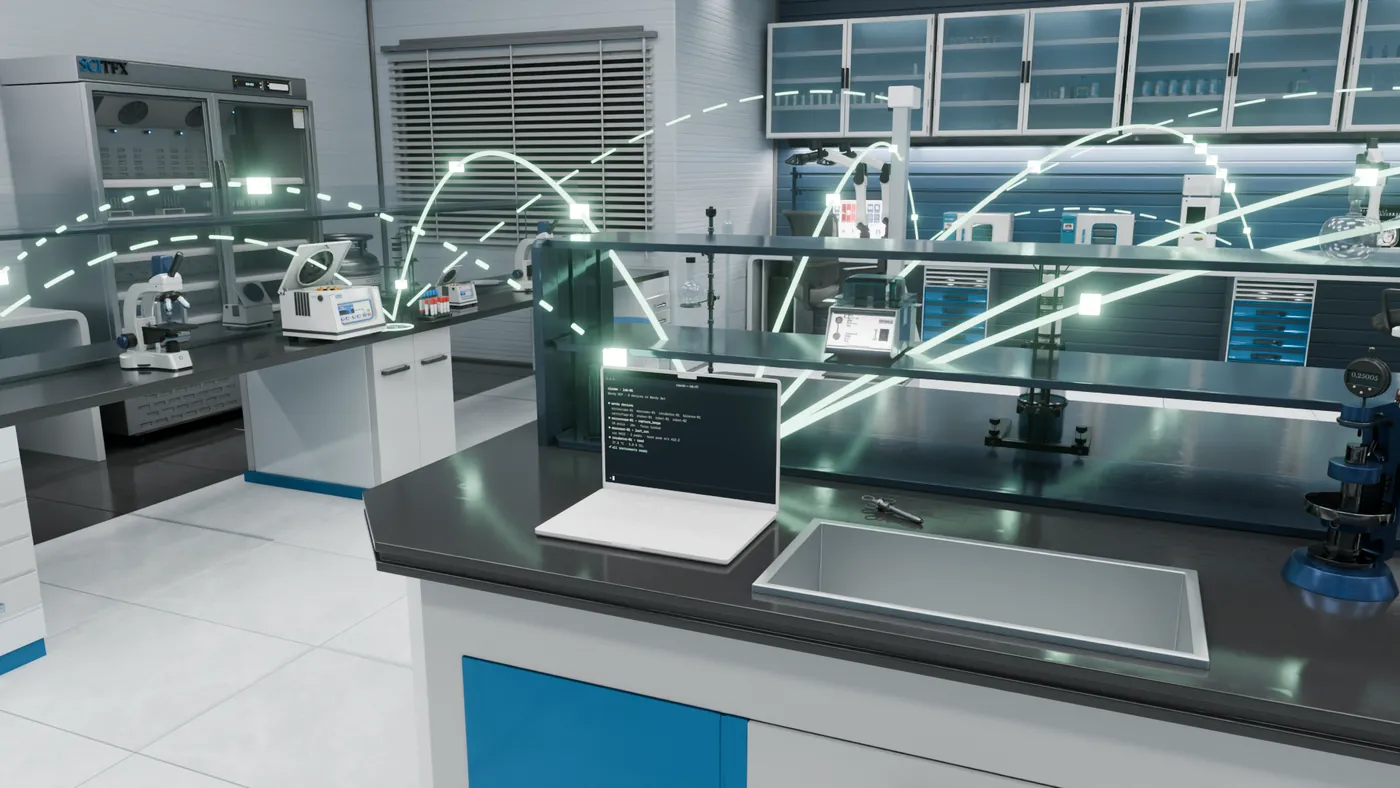
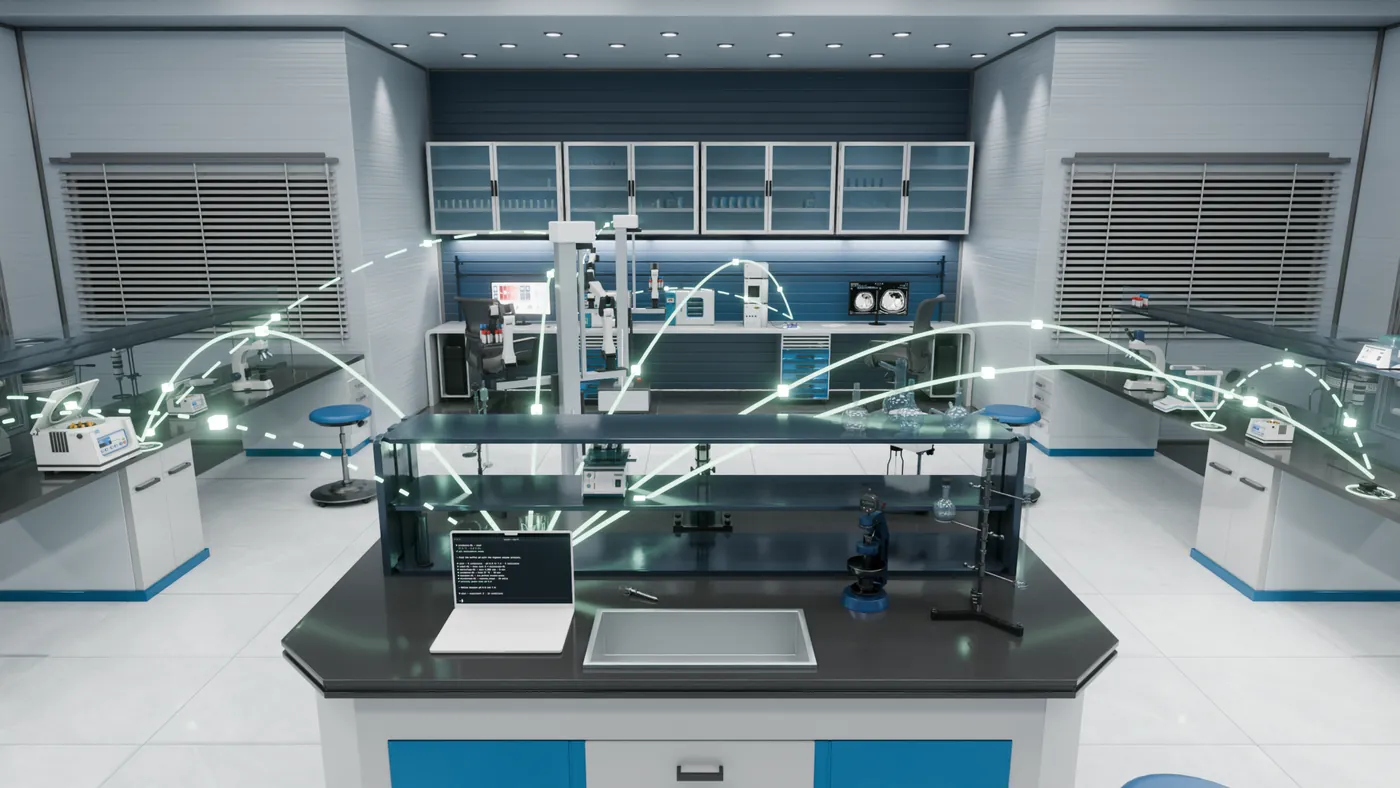
Concept visualization: every instrument, robot, and laptop on one secure network.
The problem
What the disconnected lab costs
The expensive part of AI in the lab is the people-hours between the instrument and the model.
Data moved by hand
Someone exports each file, cleans it up, and pastes it into the next tool. Skilled scientists end up working as the data pipeline.
Experiments that wait
The next run starts when a person is free to review the last one. Instruments sit idle overnight and over weekends while decisions queue up.
Instruments as islands
Every instrument has its own software, file format, and cable. Nothing sees the whole lab, so neither does any AI you bring in.
Records that are hard to retrace
Every manual copy is one more step between the instrument and the result, and one more step to explain in a review.
One instrument by hand is a chore. A lab full of them is a full-time job, and it still stops at night.
Hiring more people does not fix this, because the cause is the architecture. As long as an instrument can only be reached through a person, every new instrument and every new experiment adds manual work. The labs that get the most from AI will be the ones where an agent can reach instruments directly, under rules the lab sets.
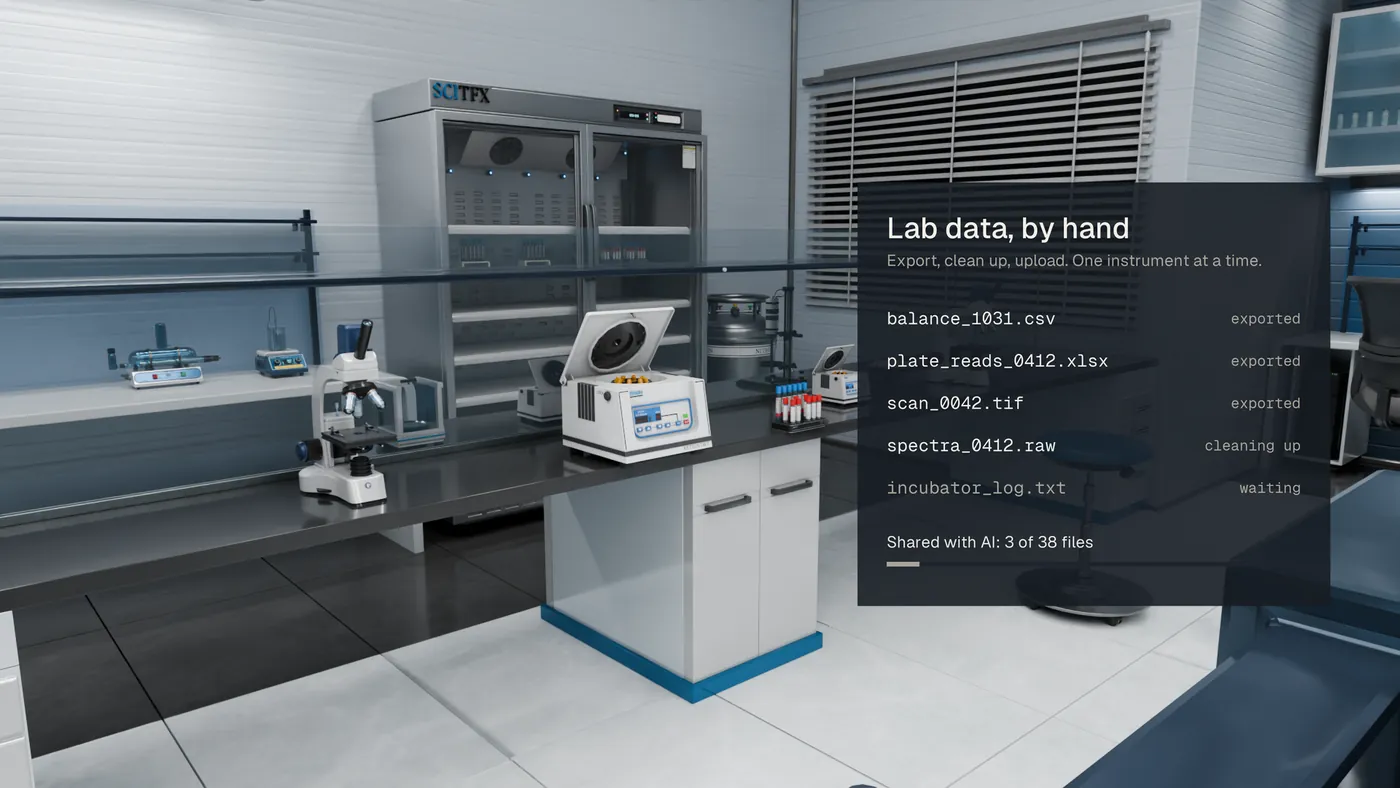
Concept visualization: the data that reaches AI, one file at a time.
The change
Every instrument becomes a tool AI can use
Four steps, in plain terms. They work with the instruments you have, as long as your software can reach them over an interface such as USB or the local network.
1
A small computer beside the instrument
A Jetson Orin Nano, Raspberry Pi 5, or Qualcomm IQ9 sits on the bench next to the microscope, mass spectrometer, incubator, balance, or centrifuge.
2
The driver runs as an app
Your team or a coding agent packages the instrument’s driver as a containerized app and deploys it with one command. It gets only the hardware access it declares.
3
The instrument becomes an MCP server
The app exposes the instrument as a set of tools AI can call, such as capturing an image or pulling a spectrum.
4
Wendy Net connects the lab
Every device, robot, and laptop joins one secure network over Ethernet, Wi-Fi, Bluetooth, or Wi-Fi Aware, so agents get live context from the whole lab.
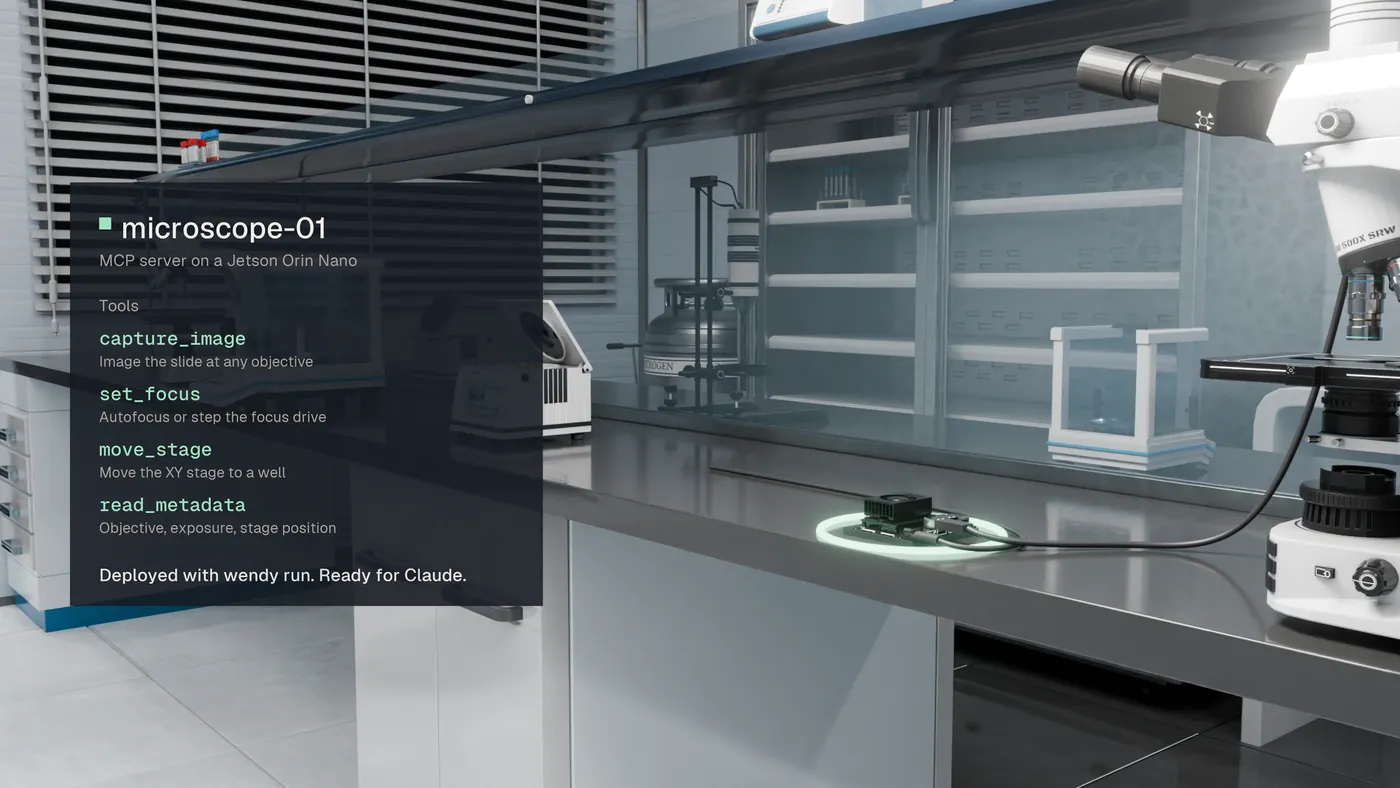
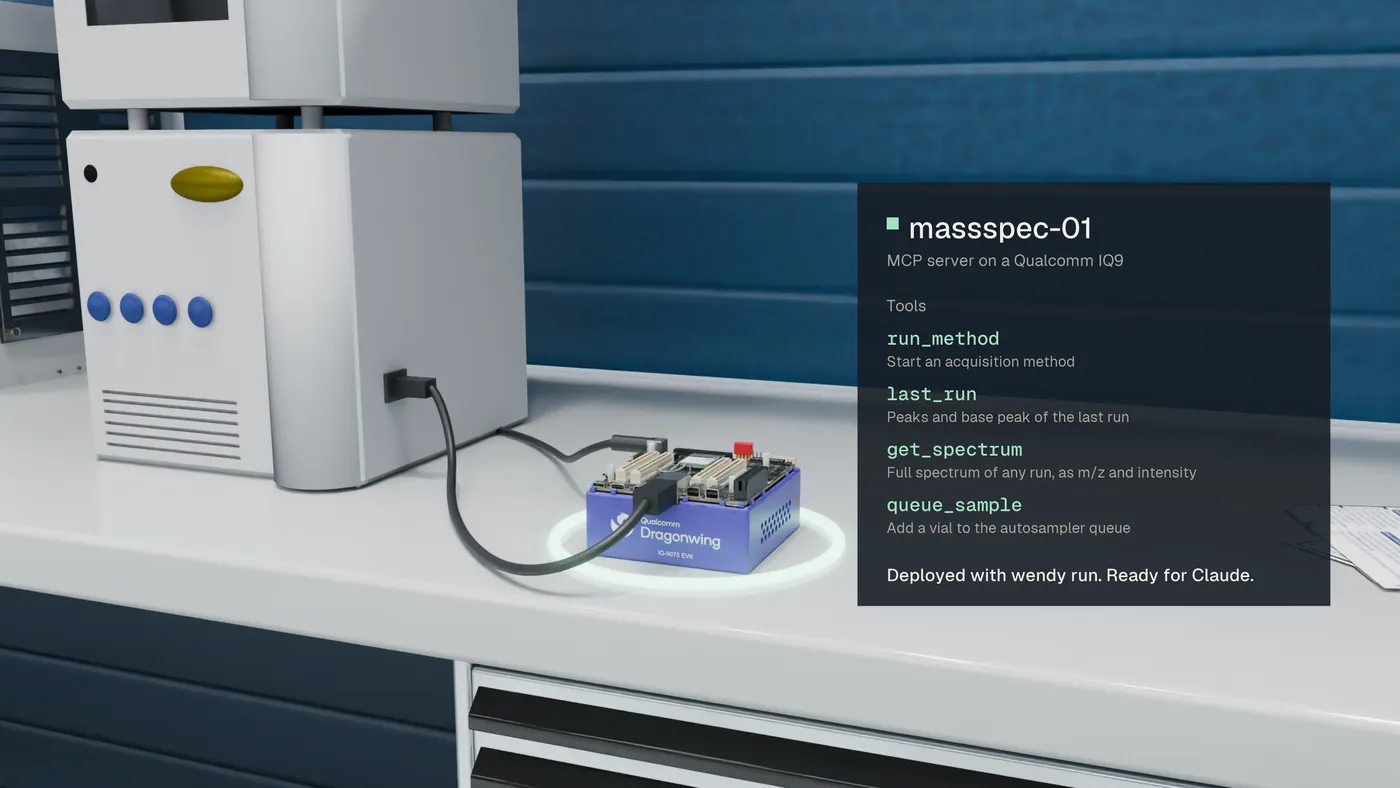
Concept visualization: instruments served as MCP servers. Tool names are examples.
The result
From one instrument to an experiment loop
Once instruments are tools, an agent can close the loop: plan the run, carry it out, read the result, and choose what to try next. Your scientists set the question, the limits, and the review points.
01
Design
An AI agent like Claude designs an experiment from live readings across the lab.
02
Run
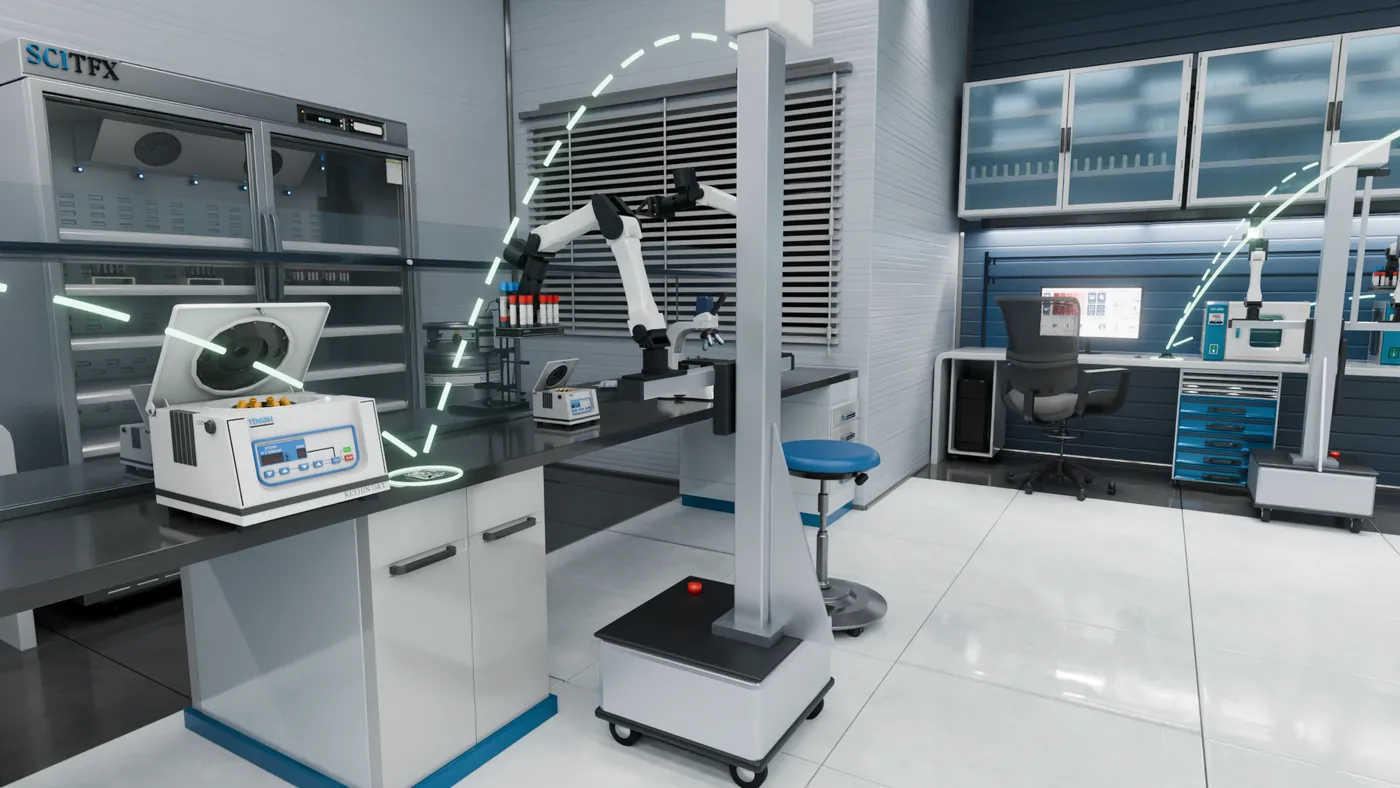
Robots and instruments run it, with samples carried between stations.
03
Measure
Every result streams straight back, with no export step in between.
04
Learn
The agent picks the next experiment, and the next one, day and night.
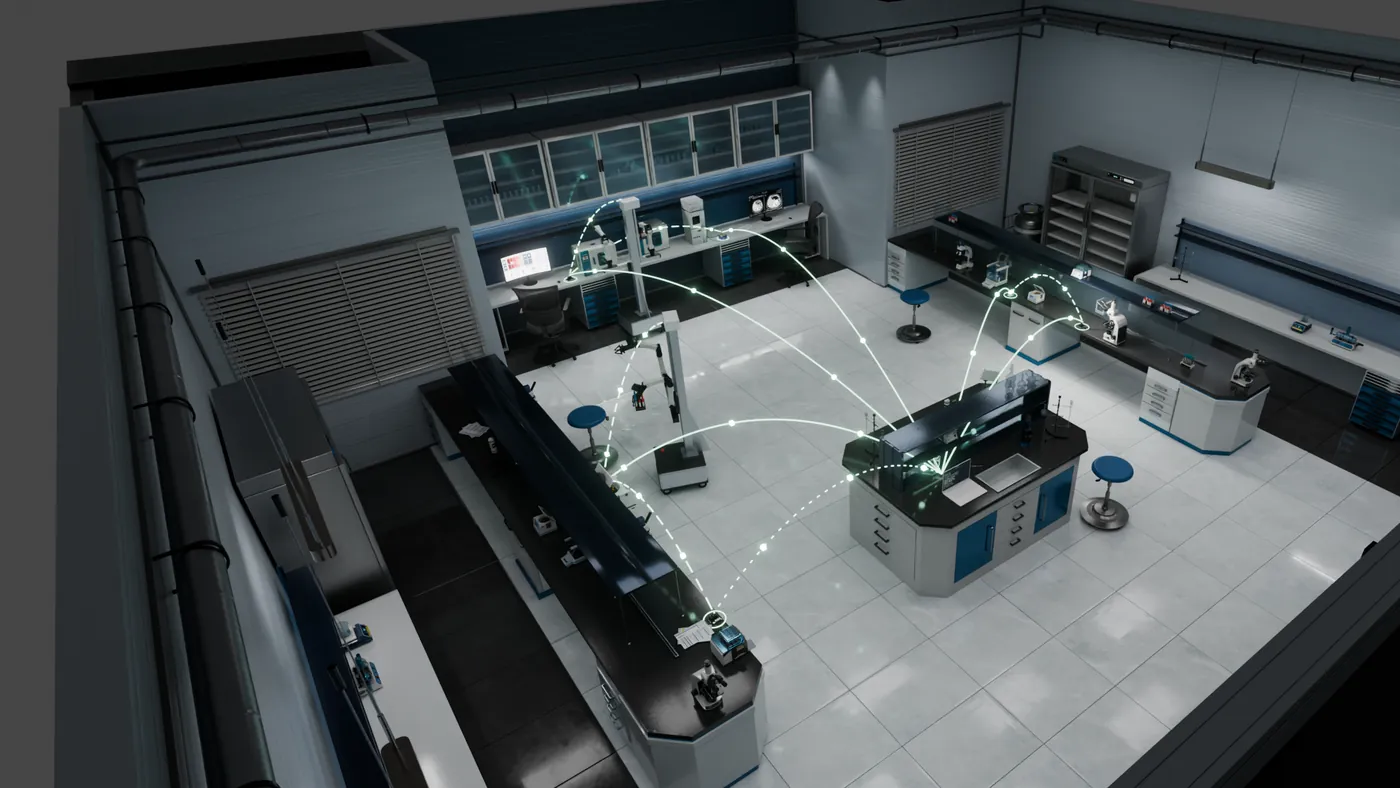
Concept visualization: the lab overnight, with results flowing back after every run.
What this changes for leaders
More experiment cycles from the instruments you already own, because the loop no longer stops when people go home. Scientists spend their time on judgment rather than file handling. And robots running on WendyOS join the same network and platform as the instruments, so automation grows one station at a time.
Why now
Agents are starting to run lab instruments
In August 2026 Anthropic previewed the Model Hardware Standard, a shared specification for AI agents to safely operate physical devices. Its case studies include protein assays, qPCR, dose-response experiments, and microscopy.
What the standard covers
- A standardized driver, with simple read and write primitives
- A reference file: what a device can measure and adjust, and its safety limits
- Agent access through MCP, the command line, or code
What a lab still needs around the driver
- A computer beside the instrument to host the driver
- A way to deploy and update it, with updates that roll back on failure
- Hardware access limited to what each app declares
- Secure networking, device identity, logs, and operation with no internet
A standard makes the driver common. Wendy is where the drivers live.
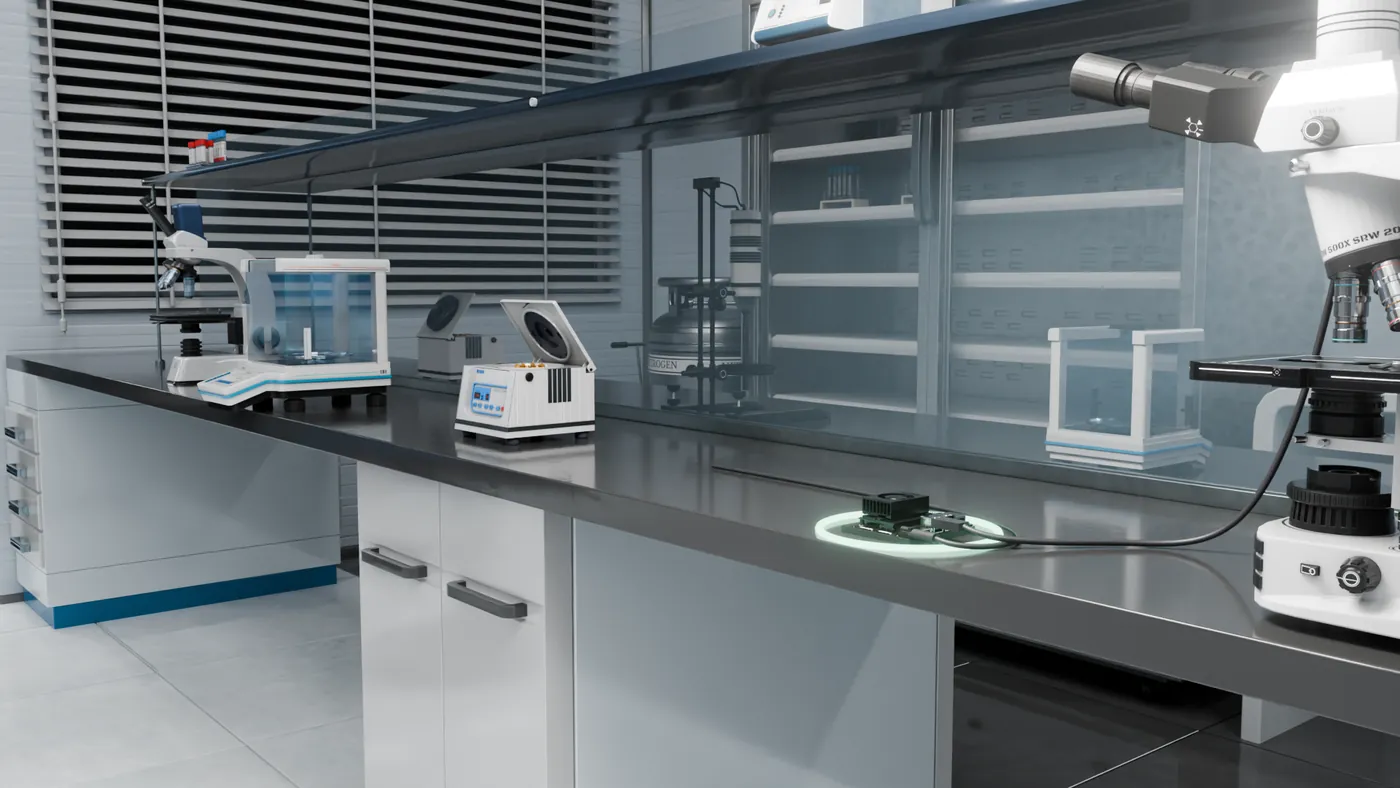
Concept visualization: the driver runs on a computer beside the instrument.
Source: Anthropic, Previewing the Model Hardware Standard, August 27, 2026. Wendy is not a named partner, and the specification is not yet public, so compatibility is untested.
Risk & control
Built for your quality and security review
For regulated work, the deciding questions are where the data goes, who can reach the device, and whether you can retrace a result.
Your data can stay on site
Apps and on-device models run on hardware beside your instruments, and devices can run fully offline. You decide what leaves, including anything you send to a cloud AI model.
Every connection authenticated
Once a device is provisioned, every connection uses mutual TLS with a certificate unique to that device. Apps get only the hardware they declare.
Repeatable and traceable
Containerized apps on a versioned OS image pin each run: same code, same stack, same device state. Apps can log inputs, model versions, and decisions on the device.
Every claim is checkable
The platform is Apache 2.0 open source, every release ships with an SBOM and build provenance, and our security threat analysis is public.
Validation stays with your quality system. Wendy gives your quality team pinned versions, device logs, and code it can read. How those fit your GxP or audit requirements is your team's call.
On real hardware
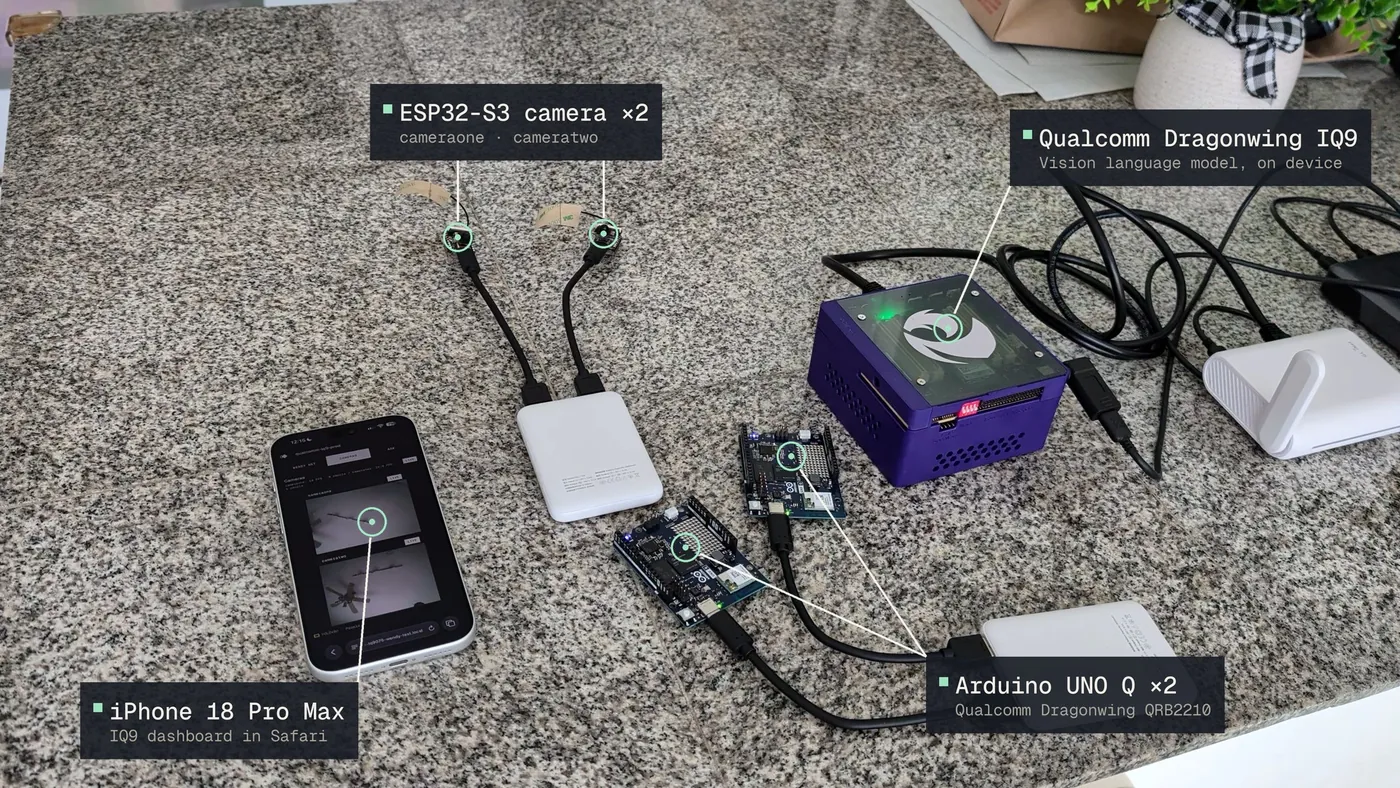
Six devices on one table, completely air-gapped.
3.23 s
For the IQ9 to describe two camera feeds, on device, in one timed run of the unedited demo. Nothing on the table touched the internet.
Watch the demo: youtu.be/lR-ScufrZ6A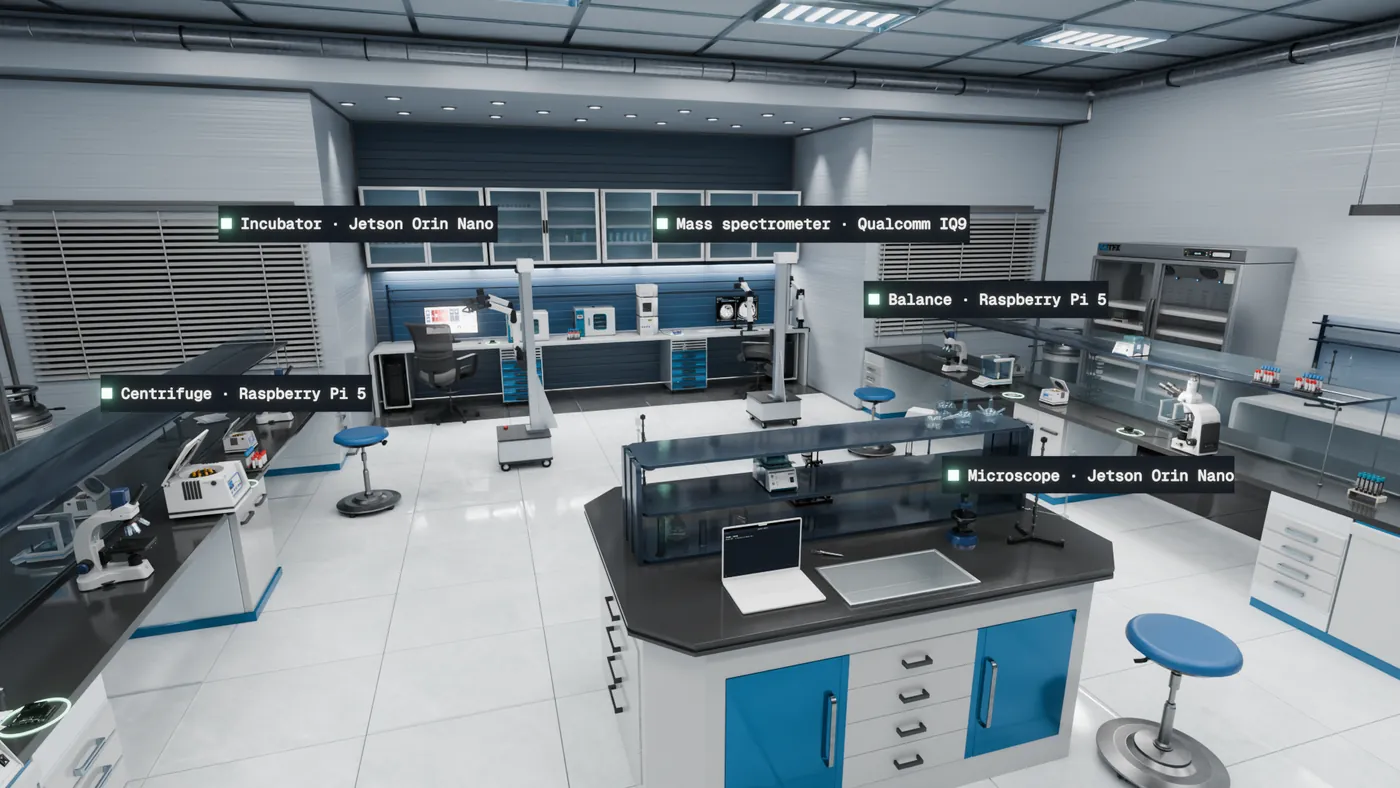
Next step
Start with one instrument and one workflow.
The first step risks an afternoon of one engineer's time. Tell us about your instruments and your workflows, or hand this brief to your engineering lead and let them start this week.
1
Day one
One engineer, one device, one laptop. Install the free tools and see your first application running the same afternoon. No contract required.
2
Week one
A driver for one instrument running on your own bench, with your security and quality teams reading the open-source code in parallel.
3
From one bench to the lab
The workflow that runs one instrument extends to the next, and to every site, with the same command each time.
© 2026 Wendy Labs Inc · Apache 2.0